

Procedures in Office Settings
Dialysis Vascular Access for End-Stage Renal Disease Patients
Life-sustaining procedures that connect ESRD patients to dialysis machines — performed safely in office-based centers with significantly better outcomes and far lower costs than hospital settings.
4x
more expensive in a hospital outpatient department vs. office-based setting
Fewer
infections and hospitalizations for patients treated in office-based centers
Understanding ESRD and Vascular Access
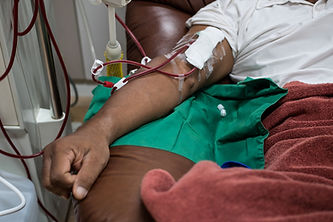
Patients with End-Stage Renal Disease (ESRD) rely on dialysis machines to filter toxins and remove excess water from their blood — a process their kidneys can no longer perform. To connect a patient to a dialysis machine, a vascular access point must be surgically created and maintained on the patient's body.
Dialysis vascular access procedures can be performed in ambulatory settings, including office-based centers. However, Medicare reimbursement for these procedures in a hospital outpatient department can be more than four times more expensive than in an office-based setting — without any corresponding improvement in patient outcomes.
Office-based care delivers measurably better outcomes: Research confirms that patients who receive dialysis vascular access care in a freestanding office-based center have lower all-cause mortality, fewer infections, and fewer hospitalizations than those treated in a hospital outpatient department
Accessing the Patient's Bloodstream
There are three primary options for establishing dialysis vascular access, each suited to different patient needs and circumstances:

Fistula
A surgically created connection between an artery and a vein. The preferred long-term access option — durable, lower infection risk, and longer-lasting than other methods.

Graft
An implanted synthetic tube that connects an artery to a vein, used when a patient's own vessels are not suitable for a fistula.

Central Vein Catheter
An external tube placed through the skin and advanced to veins in the chest. Typically used as a temporary measure while a fistula or graft matures.
Over time, fistulas and grafts can develop stenosis — a narrowing of the vessel — that requires a maintenance procedure to restore blood flow and keep the access point functional. These repair and maintenance procedures are a core component of ongoing ESRD care.
Research & Clinical Outcomes
Two landmark studies — conducted in 2013 and updated in 2017 — provide compelling evidence that office-based dialysis vascular access care produces significantly better patient outcomes than hospital outpatient department care, at a fraction of the cost.

Quality & Outcome
What is the best setting for receiving dialysis vascular access repair and maintenance services? (El-Gamil, Dobson et al., 2017)
This research confirmed that patients who received dialysis vascular access care in a freestanding office-based center had measurably better outcomes than those treated in hospital outpatient departments, including lower all-cause mortality, fewer infections, fewer septicemia-related hospitalizations, and fewer unrelated hospitalizations.

Quality & Cost
Clinical and Economic Value of Performing Dialysis Vascular Access Procedures in a Freestanding Office-Based Center (Dobson et al., 2013)
The original 2013 study established both the clinical superiority and economic value of office-based dialysis vascular access care compared to the hospital outpatient setting. Results showed significantly better patient outcomes and substantially lower costs to Medicare — findings that were confirmed and reinforced by the 2017 follow-up study.
Office-Based vs. Hospital Outpatient Department
Patients treated in freestanding vascular access centers consistently outperformed those treated in hospital outpatient departments across every measured outcome:
Lower all-cause mortality • Fewer vascular access infections
Fewer septicemia-related hospitalizations
Fewer unrelated hospitalizations • 4× lower cost to Medicare
Disparities in Dialysis Vascular Access Care
ESRD disproportionately affects communities of color — and disparities in care quality and access compound this burden. Research shows that Black and Hispanic hemodialysis patients face higher rates of life-threatening infections, while underserved regions lack adequate access to the specialists who perform vascular access procedures.
Key findings: Health Disparities in Hemodialysis-Associated Bloodstream Infections (Rha et al., CDC MMWR 2023)
A CDC study covering 2017–2020 found that:
-
Bloodstream infection rates during dialysis were 100 times higher among hemodialysis patients than among adults not on hemodialysis.
-
Infection rates were highest among non-Hispanic Black and Hispanic or Latino patients — compounding an already disproportionate disease burden.
-
Vascular access via central venous catheter was strongly associated with bloodstream infections, underscoring the importance of timely fistula creation and maintenance.
-
Health care providers should identify and address barriers to lower-risk vascular access placement and implement established best practices to prevent infections.
Key findings: Supply and Distribution of Vascular Access Physicians in the U.S. (Lee et al., Kidney360, 2020)
A cross-sectional study of vascular access physician distribution found that:
-
Regions in the South (particularly Georgia, Alabama, Mississippi, and Louisiana), Appalachia, and Midwest/Plains are significantly underserved by physicians who perform vascular access procedures.
-
These are the same regions with the highest concentrations of Black and low-income ESRD patients — creating a compounding access crisis.
-
Changes in reimbursement policy may be needed to increase the supply of vascular access physicians in underserved areas and for disadvantaged patient populations.
Why Office-Based Care is Essential to Closing the Gap
Office-based vascular access centers extend the reach of specialist care beyond major hospital systems — making life-sustaining procedures available in communities that would otherwise go underserved. Protecting fair reimbursement for office-based dialysis vascular access procedures is not just a payment policy issue: it is a health equity imperative for ESRD patients across the country.

"Patients who received dialysis vascular access care in a freestanding office-based center had significantly better outcomes than people treated in a hospital outpatient department." — El-Gamil & Dobson et al., 2017
Dialysis Vascular Access Offices
.png)


